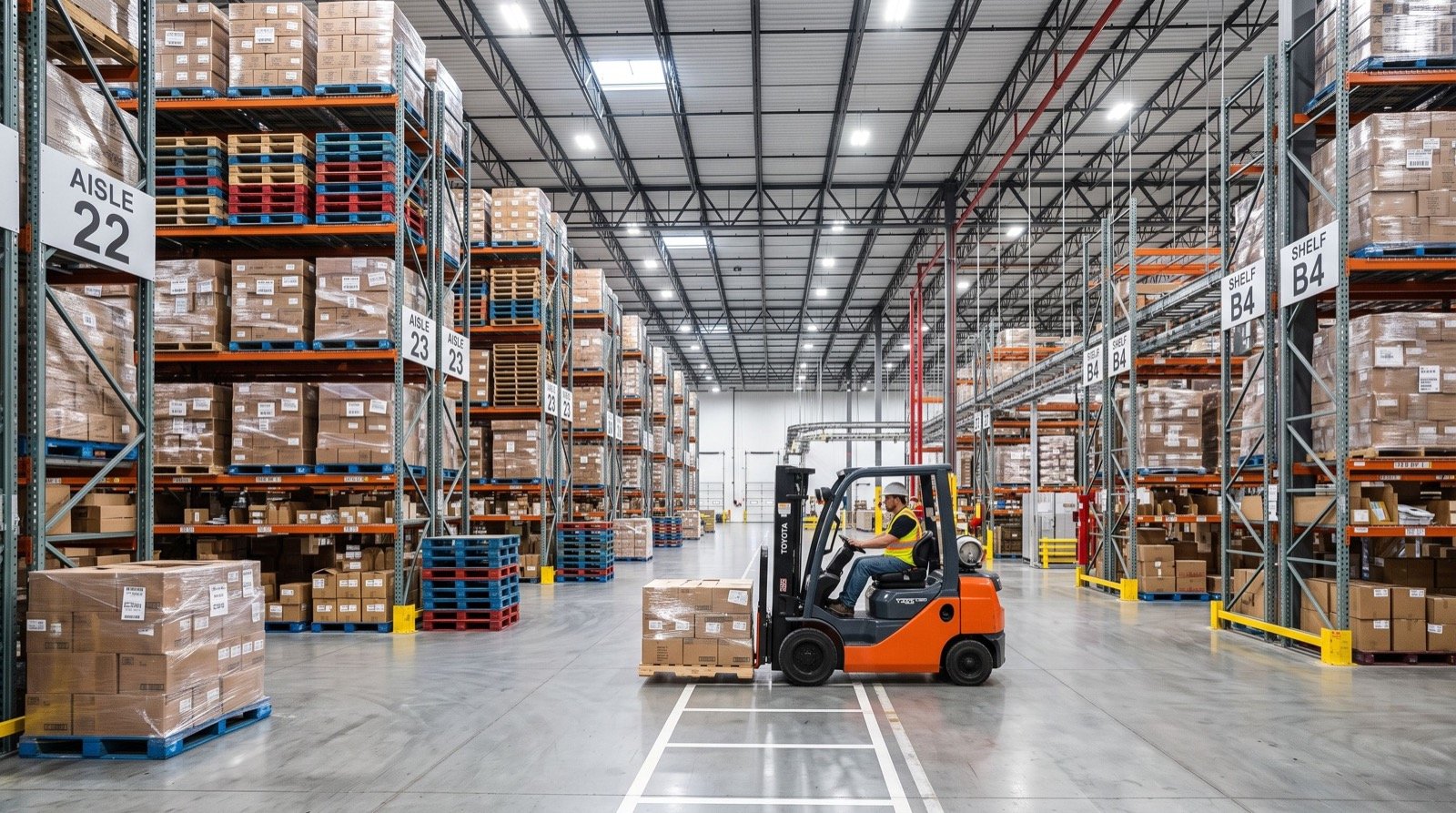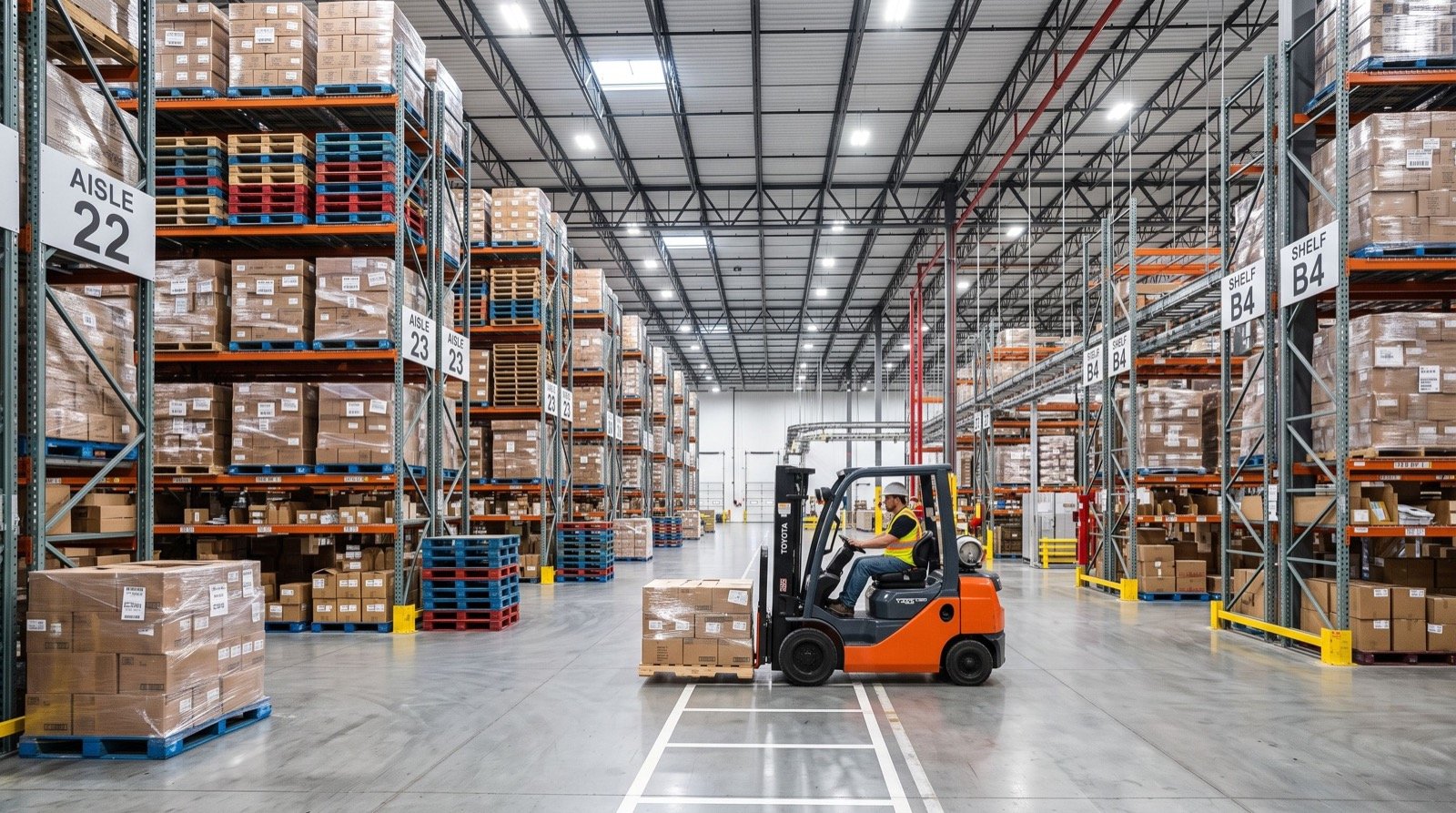

Warehouses and distribution hubs are some of the toughest environments for a business phone system to survive — dust, noise, long distances between stations, and staff who are rarely sitting at a desk. Yet reliable voice communication between the warehouse floor, the control room, and the office upstairs is exactly what keeps a 2026 logistics operation running without costly delays. Here’s how to think about IP phone hardware for a warehouse or storage facility, rather than a standard office.
Why Standard Office Phones Don’t Work Well in a Warehouse
Most desk phones are designed for a quiet office with one person sitting near them most of the day. A warehouse floor is the opposite: background noise from forklifts and conveyor systems, staff moving between zones, and often several shared stations rather than individual desks. A phone system built for a warehouse needs to prioritize clear audio pickup and simple, fast call handling over flashy features nobody has time to use mid-shift.
Two Tiers for Two Very Different Jobs
Most warehouse and storage operations end up needing two distinct categories of handset, not one generic model for everyone.
Shared Floor Stations
For shared stations near loading docks, packing areas, or shift supervisor desks, a dependable basic unit does the job without unnecessary complexity. The Fanvil V50P Basic Level IP Phone fits this role well — simple to operate between shift changes, inexpensive enough to deploy across multiple zones, and reliable for the short, frequent calls typical of floor-level coordination.
The Control Room / Operations Desk
The control room is a different story. Whoever is managing inbound logistics, coordinating with transport partners, or monitoring multiple incoming lines needs a phone that can keep up with a higher volume of simultaneous activity. The Fanvil X210 is built for exactly this kind of role, with a large touchscreen interface and support for far more concurrent lines than a basic handset.
Comparing the Two Tiers for a Logistics Environment
| Requirement | Floor Station (Basic) | Control Room (Enterprise) |
|---|---|---|
| Noise environment | High (machinery, forklifts) | Low (enclosed office) |
| Call volume | Short, frequent calls | Sustained, multi-line activity |
| Simultaneous lines | 1–2 | High capacity |
| Interface | Simple, minimal buttons | Touchscreen, call monitoring |
| Deployment cost | Low per unit | Higher, fewer units needed |
Reliability Matters More Than Features Here
In a warehouse setting, a dropped call during a time-sensitive dispatch isn’t just annoying — it can delay an entire truck loading schedule. This is one area where it genuinely pays to prioritize network stability over extra features. A dedicated voice VLAN, wired connections wherever physically possible, and a UPS on the network switch all matter more in a warehouse than in a typical office, simply because downtime has a direct operational cost.
Global telecom infrastructure bodies, including the International Telecommunication Union, have repeatedly highlighted how dependable connectivity underpins efficient supply chain and logistics operations worldwide — a warehouse floor is a very literal example of that principle in action.
Pairing Phones With Paging and Intercom Needs
Many warehouses already rely on overhead paging for urgent announcements — a truck arriving early, a safety alert, or a call for an extra hand at a specific dock. It’s worth checking whether your chosen IP phone system can integrate with, or at least coexist cleanly with, existing paging infrastructure rather than treating the two as completely separate projects.
Some enterprise-tier IP phones support basic multicast paging directly, which can reduce the number of separate systems the operations team has to maintain. Even where full integration isn’t practical, it’s worth mapping out how the two systems will share network bandwidth so neither one degrades the other during peak activity.
Firmware, Warranty, and Long-Term Support
Warehouse hardware takes more physical abuse than a typical office desk phone — dust, temperature swings near loading docks, and the occasional accidental knock. When comparing models, check warranty terms specifically for industrial or high-use environments, and confirm the manufacturer still pushes regular firmware updates for the model you’re buying. A phone that’s cheap today but unsupported in two years often costs more in the long run than a slightly pricier, better-supported alternative.
Planning a Rollout Alongside a New Storage Facility
New phone systems are frequently installed at the same time a company is setting up or expanding a storage facility. If your operation is opening a new site, it helps to line up the facility build-out and the network install together rather than treating phones as an afterthought once racking and shelving are already in. Businesses expanding their regional footprint often work with reliable local experts for the physical warehousing side, which frees the operations team to focus specifically on getting communications right from the first day of operation.
A Practical Setup Checklist
Whether you’re equipping a single warehouse or a multi-site distribution network, the same basic sequence applies:
- Map out zones and decide how many shared floor stations each one needs
- Assign enterprise-tier phones only to control room and supervisor desks
- Run physical ethernet wherever feasible instead of relying purely on WiFi
- Put the network switch and router on a UPS to survive brief power interruptions
- Pilot the system in one zone before rolling it out site-wide
Frequently Asked Questions
Can IP phones handle a noisy warehouse environment?
Yes, as long as the handset has decent noise-cancelling microphone hardware and is paired with a stable wired network connection. Noise is manageable; an unstable network connection is usually the bigger problem.
How many enterprise-tier phones does a warehouse actually need?
Typically very few — usually limited to the control room, shift supervisors, and dispatch coordination desks. The majority of floor stations are well served by basic units.
Is WiFi good enough for warehouse IP phones?
Wired connections are strongly preferred wherever physically possible. WiFi can work for mobility-focused handsets, but fixed stations should be wired to avoid interference from warehouse machinery and metal shelving.
What happens to the phone system during a power cut?
Without a UPS on the network switch and router, IP phones go down with the power. A modest UPS investment is one of the cheapest ways to protect warehouse communications during outages.
Final Thoughts
A warehouse phone system in 2026 isn’t about picking one impressive-looking handset for the whole facility — it’s about matching simple, durable hardware to the noisy floor and reserving higher-capacity phones for the control room where multi-line coordination actually happens. Get the network fundamentals right first, and the hardware choice becomes a lot easier to make confidently.